
How Energy Communities Work with INOWATTIO
A step-by-step guide to transforming your local energy group into a digitally managed, market-ready entity.
Step-by-Step
INOWATTIO turns an energy community into an operational, auditable energy pool: members and assets are onboarded, internal sharing is calculated, supplier-facing adjustments are prepared, and monthly settlements are automated — with a clear path to flexibility and market participation.
 Form the energy community (legal + governance)
Start by creating the community’s legal entity (e.g., SRL, association, cooperative) and governance rules (statute). This matters operationally because energy sharing requires clear decision-making: who can onboard members, who approves the allocation rules, and who can sign mandates and market contracts.
 Create your Energy Pool in INOWATTIO
Inside the platform, the community is configured as an Energy Pool. You define:
 Onboard members, PODs, and assets
Members are invited into the Energy Pool and register the technical identifiers that make energy sharing real in billing and settlement:
Key principle: energy sharing must be traceable at POD level. Otherwise suppliers can’t apply it cleanly and the process degrades into estimates and invoice corrections.
 Connect telemetry with NEMESIS
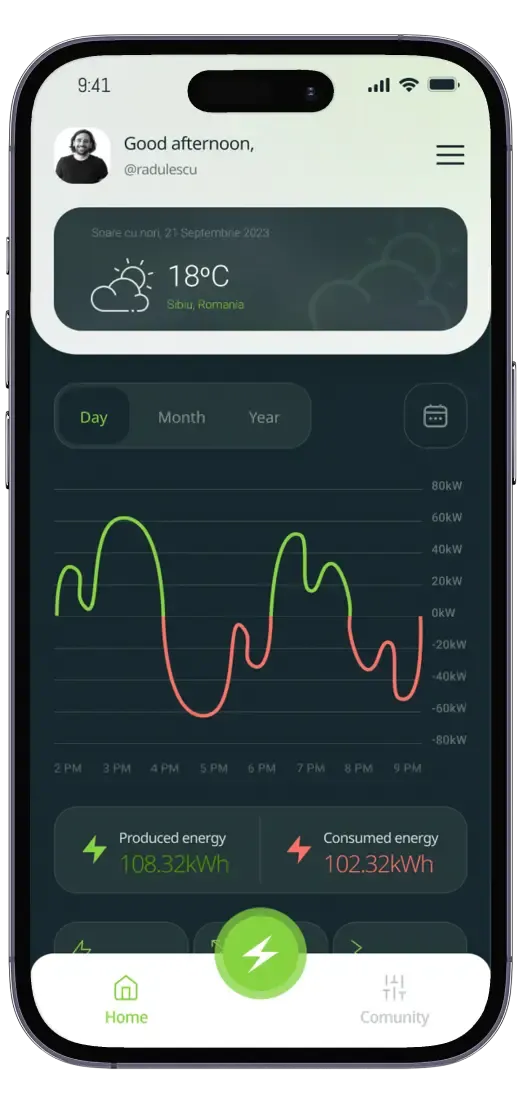
Each connected device streams operational data through NEMESIS. This gives the community real-time visibility into:
This operational layer does not replace official metering — it makes the community manageable in real time.
 Regulatory registration and data mandates
Once the pool is configured, the community prepares and submits the required information for registration (e.g., to ANRE), including the technical documentation and the list of PODs.
For reconciliation with official data, each member can sign a mandate that allows INOWATTIO (as the delegated platform) to access the member’s relevant consumption/export data from the DSO, where permitted.
 Operate daily: monitor, allocate, and keep the portfolio consistent
INOWATTIO provides continuous visibility and allocation logic so the community can operate predictably:
Important: the community does not replace the supplier. Shared energy supplements the member’s residual supply, which remains with the chosen supplier.
 Close the month: settlements, invoices, and supplier-facing outputs
At the end of each settlement period, INOWATTIO automates the full financial and reporting loop:
This is the difference between “energy sharing on paper” and energy sharing that can scale.
 Optional: evolve into a Virtual Power Plant (VPP)
When the community (or a mandated supplier/aggregator) wants to go beyond passive sharing, INOWATTIO supports the VPP path:
What Each Party Gets


Community Members
Transparency, fair settlement, and predictable monthly outcomes.

Community Operator
One system to onboard, monitor, allocate, and settle.

Energy Suppliers
POD-level clarity for billing adjustments (instead of manual annexes).

Aggregators / BRPs
Clean portfolio views and verifiable aggregates for operational integration.
 See features
Components

 Monitoring of electricity
Inverters
 Monitoring of electricity
Grids
 Monitoring of electricity
PV Systems
 Monitoring of electricity
Storage Units
 Monitoring of electricity
EV Chargers
 Monitoring of electricity
Wind Turbines
ⓘ A Note on the Regulatory Status in Romania
The full operational framework for energy communities, including market integration and settlement protocols, is awaiting finalization by ANRE.
While these regulations are being developed, INOWATTIO offers your community the ability to get ahead.
Our platform is available today for monitoring, simulating, and optimizing your internal energy flows. By preparing now, your community will be technically and operationally ready to integrate seamlessly once the market is fully open.
Supported Hardware
 Nov 13, 2025 | 2 min read
Inowattio now integrates with Huawei inverters — from homes to utility-scale
Inowattio now integrates end-to-end with Huawei. Users get unified monitoring, sub-second setpoint control for P/Q and export limits, coordinated battery dispatch, and grid-services readiness—scalable from single-phase rooftops to large three-phase and utility plants.
 Nov 13, 2025 | 2 min read
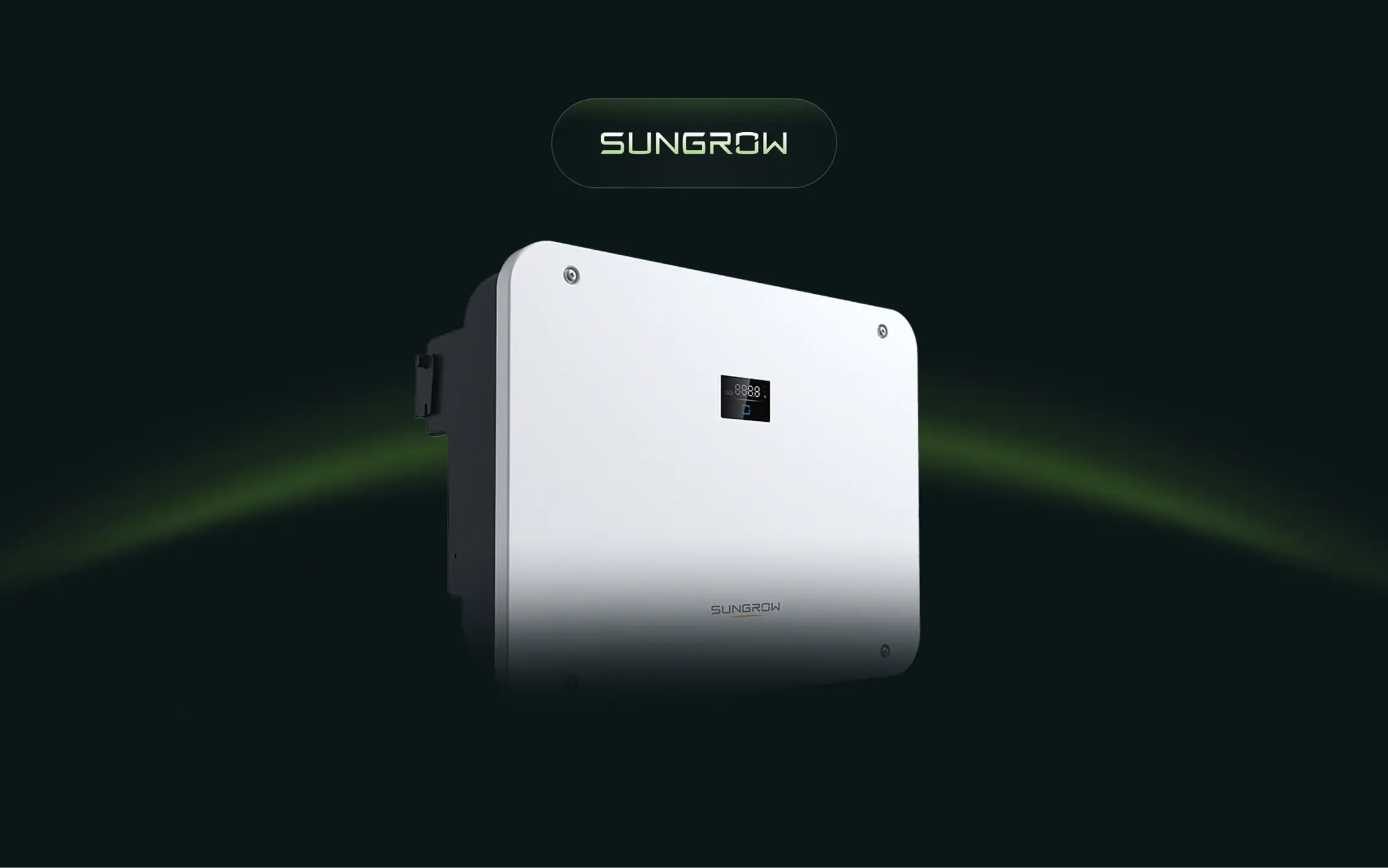
Hybrid Control and Grid-Ready Integration for Growatt Systems with Inowattio
Inowattio adds native support for Growatt inverters, delivering sub-second telemetry, closed-loop P/Q control, battery-aware dispatch, phase-level export limits, and grid-services readiness—from single-phase homes to multi-inverter sites.
 Nov 13, 2025 | 2 min read
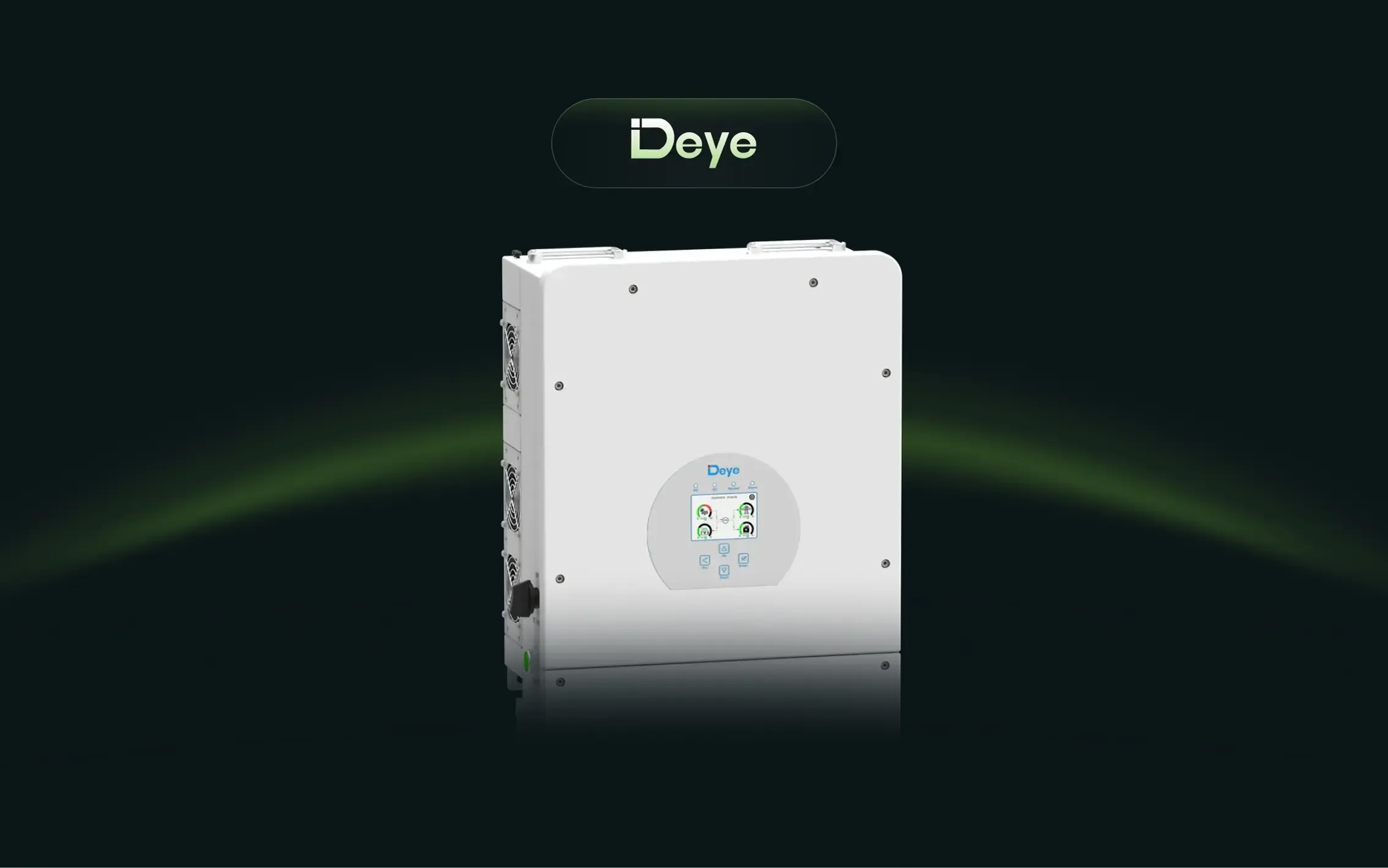
Native Integration with the Full Deye Product Line via Inowattio
Inowattio adds native support for Deye SUN hybrids, enabling sub-second telemetry, closed-loop P/Q control, battery-smart dispatch, dynamic zero-export, and EPS/backup—across single-phase homes and multi-inverter three-phase C&I sites.
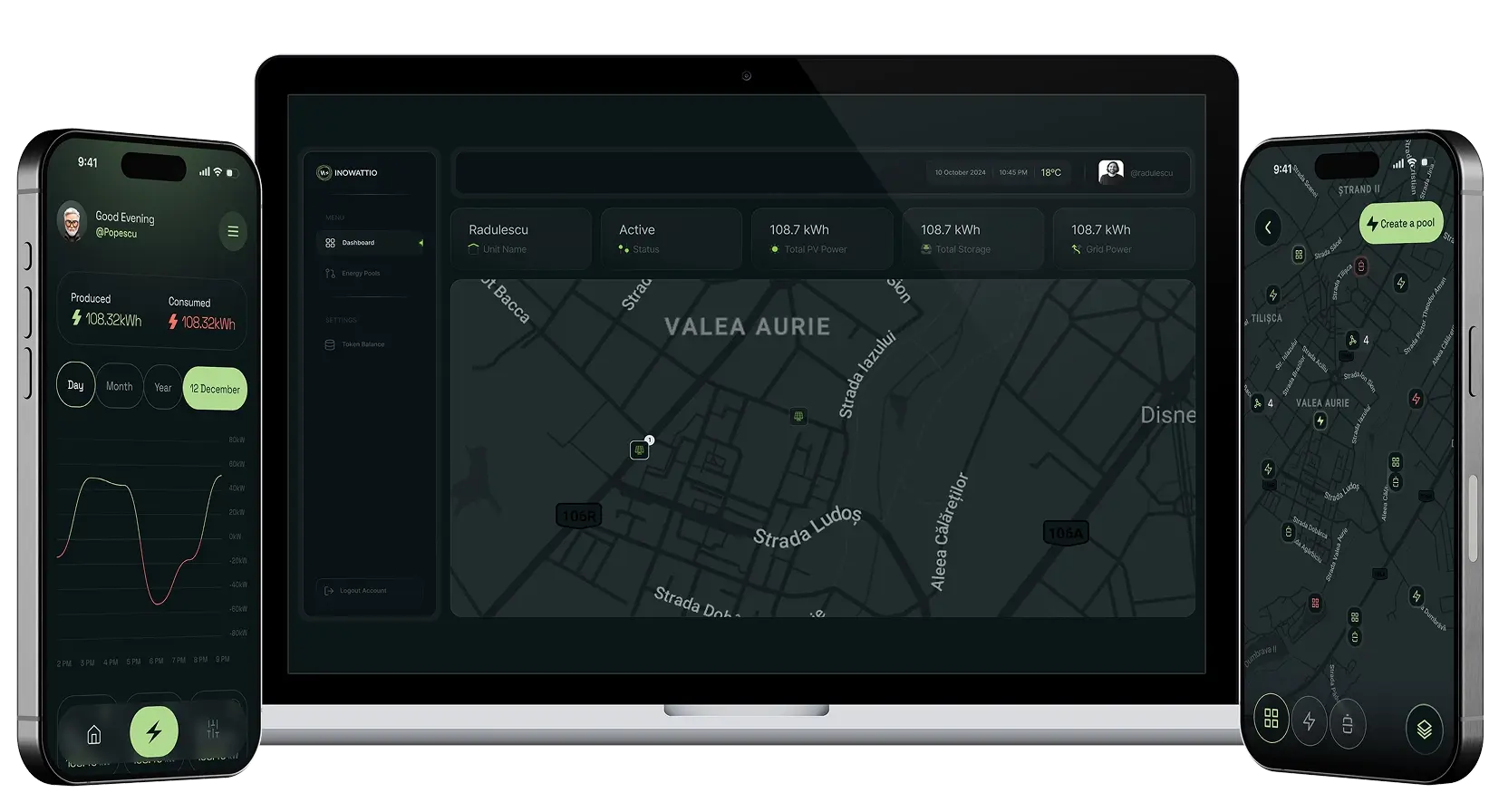
Access Inowattio Anywhere
Download the app on iOS and Android from the App Store and Google Play, and enjoy the same seamless experience on desktop as well.


 Try It Now From Web
Frequently Asked Questions
Answers to common questions about our platform and services.
What, specifically, is an energy community?
An energy community is a group of members (consumers and/or producers) who collectively organize their energy production, consumption, and sharing. The idea is simple: locally produced energy can partially cover the consumption of other members, and the benefits are distributed according to a clear rule.
Do I need to have solar panels to join a community?
No. You can be just a consumer. In a community, there are:
- members who produce (prosumers / PV / batteries)
- members who consume (without production)
- and sometimes common assets (community PV, common battery).
Can I stay with my current supplier if I join a community?
Yes. Members retain the right to choose their supplier. The community does not 'take' your supplier. In practice, shared energy supplements the energy purchased from the supplier (residual consumption).
If I have a supplier, why do I still need the community?
Because the supplier sells you energy from the market. The community can:
- reduce a portion of the energy purchased from the grid (through shared energy)
- offer you transparency and a logic for sharing benefits
- and in the medium term, it can also generate revenue from flexibility (batteries, EVs, controllable consumption).
What real benefits can I get as a member?
Typically (depending on the model and implementation):
- cheaper energy than from the grid for a portion of your consumption
- better cost stability (in certain scenarios)
- transparency: you know who produced, who consumed, and how it was distributed
- possible shared revenues (if there is surplus production or monetized flexibility).
How is energy shared within the community?
Normally, there is an allocation rule. Common examples:
- proportional to each member's consumption
- fixed quota / percentage established by statute
- priorities (e.g., school / town hall / vulnerable consumers)
- combinations (e.g., guaranteed minimum + proportional).
Important: the rule must be clear, verifiable, and stable.
Does the community 'replace' the supplier?
No. The community is not a supplier (in the standard model). The supplier remains the one who bills for energy from the grid (residual consumption) and manages the contractual supply relationship.
The community manages internally shared energy and internal settlements.
What data do I need to provide as a member?
Typically the POD, technical data about your installation (if you produce: PV/battery) and agreements/mandates for data access (where necessary).
We are not talking about excessive 'personal data,' but about the operational data necessary for energy to be settled correctly.
Is a smart meter required?
It helps enormously. With data at short intervals (e.g., 15 minutes), you can correctly allocate energy among members, reduce estimations and avoid crude monthly corrections.
Without granularity, energy sharing becomes more of a post-facto reconciliation than real operation.
What happens if the community doesn't produce enough in a month?
Then your residual consumption increases, and you will buy more from your supplier. You will not be left without power, and there is no 'supply risk'. The community only reduces how much you buy from the grid when it has a surplus.
Can communities sell energy on the market?
Yes, in the 'advanced' model, if there is a mandated party/aggregator with market capabilities (Day-Ahead/Intraday) and a forecasting + operational structure. However, most communities start with the 'passive' model (internal compensation).
What does INOWATTIO do specifically for communities?
INOWATTIO offers:
- member, POD, and asset management
- monitoring and visualization of internal flows
- calculation of internal allocations and settlements
- monthly reports and settlement documents
- support for integration with suppliers/aggregators and preparation for markets/flexibility (where the framework allows).
Who 'administers' the community in the platform?
A delegated member (established by the community's governance) has administrative access: onboarding, roles, approvals and settings.